Basic Environmental Health Yassi Pdf Free Download UPDATED
Basic Environmental Health Yassi Pdf Free Download

Intracellular Reverse Transcription of Pfizer BioNTech COVID-19 mRNA Vaccine BNT162b2 In Vitro in Human Liver Cell Line
by 1  , one , 1 , ane , one , 2 and 1,*
1
Department of Clinical Sciences, Lund University, 20502 Malmö, Sweden
2
Infection Medicine, Department of Clinical Sciences, Lund University, 22362 Lund, Sweden
*
Writer to whom correspondence should be addressed.
Academic Editor: Stephen Malnick
Received: 18 Jan 2022 / Revised: 19 February 2022 / Accustomed: 23 February 2022 / Published: 25 February 2022
Abstract
Preclinical studies of COVID-19 mRNA vaccine BNT162b2, developed by Pfizer and BioNTech, showed reversible hepatic effects in animals that received the BNT162b2 injection. Furthermore, a recent report showed that SARS-CoV-ii RNA can be reverse-transcribed and integrated into the genome of human cells. In this study, we investigated the effect of BNT162b2 on the human liver jail cell line Huh7 in vitro. Huh7 cells were exposed to BNT162b2, and quantitative PCR was performed on RNA extracted from the cells. We detected high levels of BNT162b2 in Huh7 cells and changes in gene expression of long interspersed nuclear chemical element-1 (LINE-1), which is an endogenous reverse transcriptase. Immunohistochemistry using antibody binding to LINE-i open reading frame-1 RNA-binding protein (ORFp1) on Huh7 cells treated with BNT162b2 indicated increased nucleus distribution of LINE-1. PCR on genomic DNA of Huh7 cells exposed to BNT162b2 amplified the DNA sequence unique to BNT162b2. Our results point a fast upwardly-take of BNT162b2 into human liver cell line Huh7, leading to changes in LINE-1 expression and distribution. We also show that BNT162b2 mRNA is reverse transcribed intracellularly into DNA in as fast every bit 6 h upon BNT162b2 exposure.
one. Introduction
Coronavirus disease 2019 (COVID-xix) acquired by severe astute respiratory syndrome coronavirus 2 (SARS-CoV-two) was announced by the Earth Health Organization (WHO) as a global pandemic on 11 March 2020, and it emerged as a devasting health crisis. Equally of February 2022, COVID-19 has led to over 430 million reported infection cases and 5.9 one thousand thousand deaths worldwide [ane]. Effective and safe vaccines are urgently needed to reduce the morbidity and mortality rates associated with COVID-19.
Several vaccines for COVID-19 have been developed, with item focus on mRNA vaccines (by Pfizer-BioNTech and Moderna), replication-lacking recombinant adenoviral vector vaccines (past Janssen-Johnson and Johnson, Astra-Zeneca, Sputnik-V, and CanSino), and inactivated vaccines (by Sinopharm, Bharat Biotech and Sinovac). The mRNA vaccine has the advantages of beingness flexible and efficient in immunogen blueprint and manufacturing, and currently, numerous vaccine candidates are in various stages of development and awarding. Specifically, COVID-19 mRNA vaccine BNT162b2 developed by Pfizer and BioNTech has been evaluated in successful clinical trials [2,3,four] and administered in national COVID-19 vaccination campaigns in different regions around the world [5,6,7,viii].
BNT162b2 is a lipid nanoparticle (LNP)–encapsulated, nucleoside-modified RNA vaccine (modRNA) and encodes the full-length of SARS-CoV-2 spike (S) protein, modified past 2 proline mutations to ensure antigenically optimal pre-fusion conformation, which mimics the intact virus to arm-twist virus-neutralizing antibodies [3]. Consistent with randomized clinical trials, BNT162b2 showed loftier efficiency in a broad range of COVID-19-related outcomes in a real-earth setting [v]. Withal, many challenges remain, including monitoring for long-term condom and efficacy of the vaccine. This warrants further evaluation and investigations. The condom profile of BNT162b2 is currently only available from short-term clinical studies. Less mutual adverse effects of BNT162b2 have been reported, including pericarditis, arrhythmia, deep-vein thrombosis, pulmonary embolism, myocardial infarction, intracranial hemorrhage, and thrombocytopenia [four,ix,10,11,12,thirteen,14,15,xvi,17,18,19,xx]. There are also studies that written report adverse furnishings observed in other types of vaccines [21,22,23,24]. To better understand mechanisms underlying vaccine-related adverse furnishings, clinical investigations every bit well every bit cellular and molecular analyses are needed.
A recent study showed that SARS-CoV-2 RNAs can be reverse-transcribed and integrated into the genome of human being cells [25]. This gives rise to the question of if this may also occur with BNT162b2, which encodes partial SARS-CoV-2 RNA. In pharmacokinetics data provided by Pfizer to European Medicines Bureau (EMA), BNT162b2 biodistribution was studied in mice and rats by intra-muscular injection with radiolabeled LNP and luciferase modRNA. Radioactivity was detected in most tissues from the kickoff fourth dimension point (0.25 h), and results showed that the injection site and the liver were the major sites of distribution, with maximum concentrations observed at eight–48 h postal service-dose [26]. Furthermore, in animals that received the BNT162b2 injection, reversible hepatic furnishings were observed, including enlarged liver, vacuolation, increased gamma glutamyl transferase (γGT) levels, and increased levels of aspartate transaminase (AST) and alkaline metal phosphatase (ALP) [26]. Transient hepatic effects induced by LNP delivery systems have been reported previously [27,28,29,30], nevertheless, it has likewise been shown that the empty LNP without modRNA alone does non introduce any significant liver injury [27]. Therefore, in this study, nosotros aim to examine the effect of BNT162b2 on a homo liver cell line in vitro and investigate if BNT162b2 can be reverse transcribed into Dna through endogenous mechanisms.
2. Materials and Methods
ii.1. Cell Culture
Huh7 cells (JCRB Cell Bank, Osaka, Nippon) were cultured in 37 °C at five% COtwo with DMEM medium (HyClone, HYCLSH30243.01) supplemented with 10% (five/5) fetal bovine serum (Sigma-Aldrich, F7524-500ML, Burlington, MA, U.s.a.) and 1% (v/v) Penicillin-Streptomycin (HyClone, SV30010, Logan, UT, USA). For BNT162b2 treatment, Huh7 cells were seeded with a density of 200,000 cells/well in 24-well plates. BNT162b2 mRNA vaccine (Pfizer BioNTech, New York, NY, U.s.a.) was diluted with sterile 0.ix% sodium chloride injection, USP into a final concentration of 100 μg/mL as described in the manufacturer's guideline [31]. BNT162b2 suspension was so added in cell culture media to reach last concentrations of 0.five, one.0, or 2.0 μg/mL. Huh7 cells were incubated with or without BNT162b2 for 6, 24, and 48 h. Cells were washed thoroughly with PBS and harvested by trypsinization and stored in −eighty °C until further utilize.
ii.2. Existent-TIME RT-QPCR
RNA from the cells was extracted with RNeasy Plus Mini Kit (Qiagen, 74134, Hilden, Federal republic of germany) post-obit the manufacturer's protocol. RT-PCR was performed using RevertAid First Strand cDNA Synthesis kit (Thermo Fisher Scientific, K1622, Waltham, MA, USA) post-obit the manufacturers protocol. Real-fourth dimension qPCR was performed using Maxima SYBR Green/ROX qPCR Master Mix (Thermo Fisher Scientific, K0222, Waltham, MA, U.s.a.) with primers for BNT162b2, LINE-i and housekeeping genes ACTB and GAPDH (Table 1).
2.three. Immunofluorescence Staining and Confocal Imaging
Huh7 cells were cultured in viii-chamber slides (LAB-TEK, 154534, Santa Cruz, CA, USA) with a density of twoscore,000 cells/well, with or without BNT162b2 (0.v, 1 or ii µg/mL) for six h. Immunohistochemistry was performed using primary antibody anti-LINE-ane ORF1p mouse monoclonal antibody (Merck, 3574308, Kenilworth, NJ, U.s.), secondary antibiotic Cy3 Ass anti-mouse (Jackson ImmunoResearch, West Grove, PA, Usa), and Hoechst (Life technologies, 34850, Carlsbad, CA, USA), post-obit the protocol from Thermo Fisher (Waltham, MA, USA). Two images per condition were taken using a Zeiss LSM 800 and a 63X oil immersion objective, and the staining intensity was quantified on the individual whole cell expanse and the nucleus surface area on fifteen cells per image by ImageJ 1.53c. LINE-1 staining intensity for the cytosol was calculated by subtracting the intensity of the nucleus from that of the whole cell. All images of the cells were assigned a random number to forbid bias. To mark the nuclei (determined by the Hoechst staining) and the whole cells (determined by the borders of the LINE-1 fluorescence), the Freehand selection tool was used. These areas were so measured, and the mean intensity was used to compare the groups.
2.iv. Genomic DNA Purification, PCR Amplification, Agarose Gel Purification, and Sanger Sequencing
Genomic DNA was extracted from cell pellets with PBND buffer (x mM Tris-HCl pH 8.3, 50 mM KCl, ii.v mM MgCl2, 0.45% NP-twoscore, 0.45% Tween-xx) according to protocol described previously [32]. To remove residual RNA from the Dna grooming, RNase (100 µg/mL, Qiagen, Hilden, Germany) was added to the Dna preparation and incubated at 37 °C for 3 h, followed by 5 min at 95 °C. PCR was then performed using primers targeting BNT162b2 (sequences are shown in Table 1), with the following plan: v min at 95 °C, 35 cycles of 95 °C for xxx s, 58 °C for thirty s, and 72 °C for 1 min; finally, 72 °C for v min and 12 °C for five min. PCR products were run on one.four% (w/v) agarose gel. Bands corresponding to the amplicons of the expected size (444 bps) were cut out and DNA was extracted using QIAquick PCR Purification Kit (Qiagen, 28104, Hilden, Germany), following the manufacturer's instructions. The sequence of the Deoxyribonucleic acid amplicon was verified by Sanger sequencing (Eurofins Genomics, Ebersberg, Deutschland).
Statistics
Statistical comparisons were performed using two-tailed Educatee's t-exam and ANOVA. Information are expressed equally the mean ± SEM or ± SD. Differences with p < 0.05 are considered pregnant.
ii.5. Ethical Statements
The Huh7 jail cell line was obtained from Japanese Collection of Inquiry Bioresources (JCRB) Jail cell Bank.
3. Results
3.1. BNT162b2 Enters Man Liver Jail cell Line Huh7 Cells at High Efficiency
To determine if BNT162b2 enters man liver cells, nosotros exposed human liver cell line Huh7 to BNT162b2. In a previous written report on the uptake kinetics of LNP delivery in Huh7 cells, the maximum biological efficacy of LNP was observed between iv–7 h [33]. Therefore, in our study, Huh7 cells were cultured with or without increasing concentrations of BNT162b2 (0.five, 1.0 and two.0 µg/mL) for vi, 24, and 48 h. RNA was extracted from cells and a existent-time quantitative contrary transcription polymerase chain reaction (RT-qPCR) was performed using primers targeting the BNT162b2 sequence, every bit illustrated in Effigy ane. The full sequence of BNT162b2 is publicly available [34] and contains a 2-nucleotides cap; 5′- untranslated region (UTR) that incorporates the 5′ -UTR of a homo α-globin gene; the full-length of SARS-CoV-2 S protein with two proline mutations; three′-UTR that incorporates the human mitochondrial 12S rRNA (mtRNR1) segment and human AES/TLE5 cistron segment with 2 C→U mutations; poly(A) tail. Detailed assay of the S protein sequence in BNT162b2 revealed 124 sequences that are 100% identical to human genomic sequences and three sequences with only one nucleotide (nt) mismatch in xix–26 nts (Table S1, run into Supplementary Materials). To detect BNT162b2 RNA level, nosotros designed primers with forward primer located in SARS-CoV-2 S protein regions and opposite primer in 3′-UTR, which allows detection of PCR amplicon unique to BNT162b2 without unspecific binding of the primers to homo genomic regions.
RT-qPCR results showed that Huh7 cells treated with BNT162b2 had high levels of BNT162b2 mRNA relative to housekeeping genes at 6, 24, and 48 h (Figure 2, presented in logged 2−ΔΔCT due to exceptionally high levels). The 3 BNT162b2 concentrations led to like intracellular BNT162b2 mRNA levels at the different time points, except that the pregnant difference between 1.0 and 2.0 µg/mL was observed at 48 h. BNT162b2 mRNA levels were significantly decreased at 24 h compared to 6 h, merely increased again at 48 h.
3.ii. Outcome of BNT162b2 on Human Endogenous Contrary Transcriptase Long Interspersed Nuclear Element-1 (LINE-1)
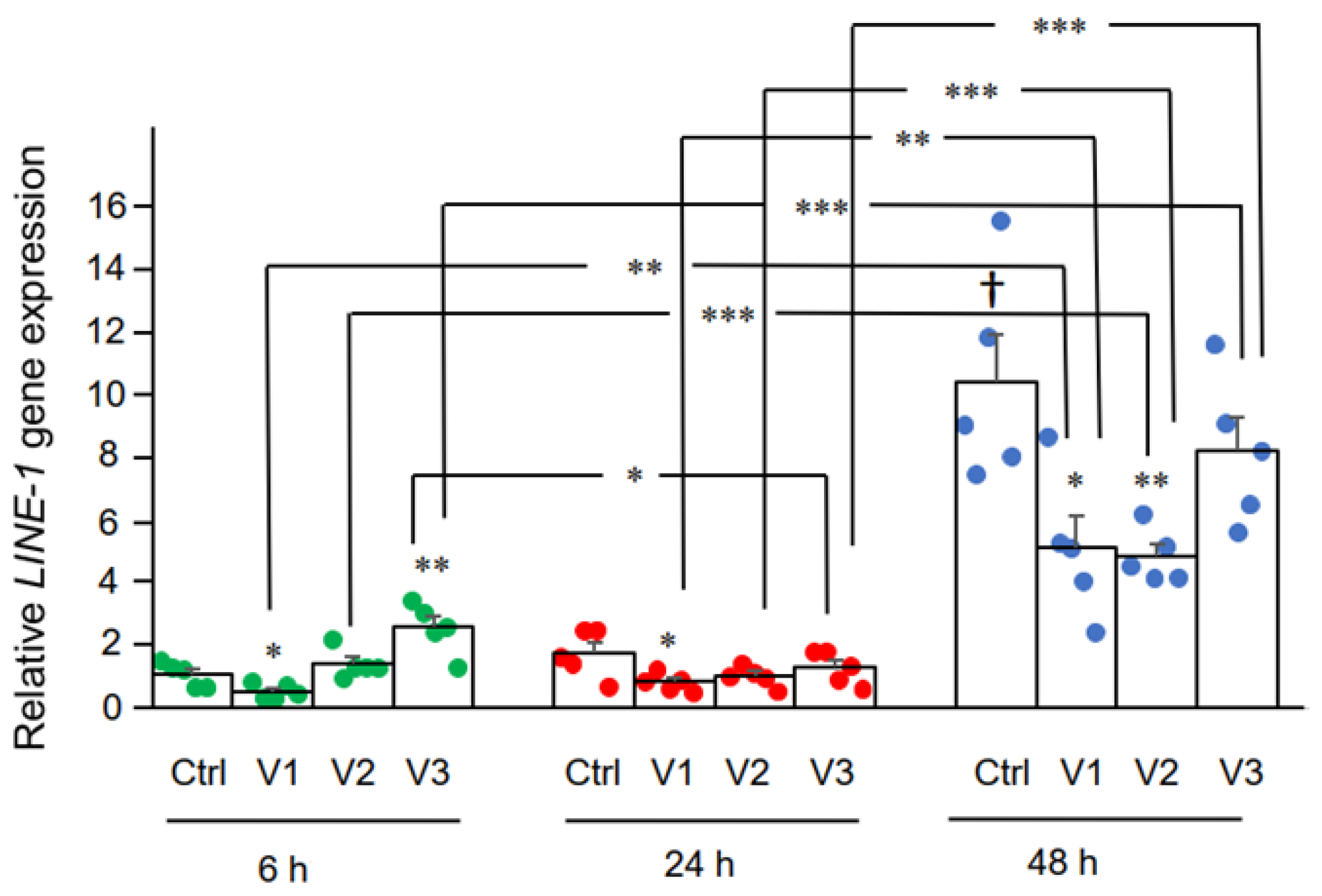
Here we examined the effect of BNT162b2 on LINE-1 cistron expression. RT-qPCR was performed on RNA purified from Huh7 cells treated with BNT162b2 (0, 0.5, ane.0, and 2.0 µg/mL) for six, 24, and 48 h, using primers targeting LINE-1. Significantly increased LINE-1 expression compared to control was observed at 6 h by 2.0 µg/mL BNT162b2, while lower BNT162b2 concentrations decreased LINE-1 expression at all time points (Figure 3).
Next, nosotros studied the effect of BNT162b2 on LINE-1 protein level. The full-length LINE-1 consists of a five′ untranslated region (UTR), two open reading frames (ORFs), ORF1 and ORF2, and a 3′UTR, of which ORF1 is an RNA binding protein with chaperone activity. The retrotransposition activity of LINE-1 has been demonstrated to involve ORF1 translocation to the nucleus [35]. Huh7 cells treated with or without BNT162b2 (0.5, 1.0 and 2.0 µg/mL) for 6 h were fixed and stained with antibodies binding to LINE-1 ORF1p, and DNA-specific probe Hoechst for visualization of cell nucleus (Figure 4a). Quantification of immunofluorescence staining intensity showed that BNT162b2 increased LINE-i ORF1p poly peptide levels in both the whole jail cell area and nucleus at all concentrations tested (Figure 4b–d).
3.3. Detection of Reverse Transcribed BNT162b2 DNA in Huh7 Cells
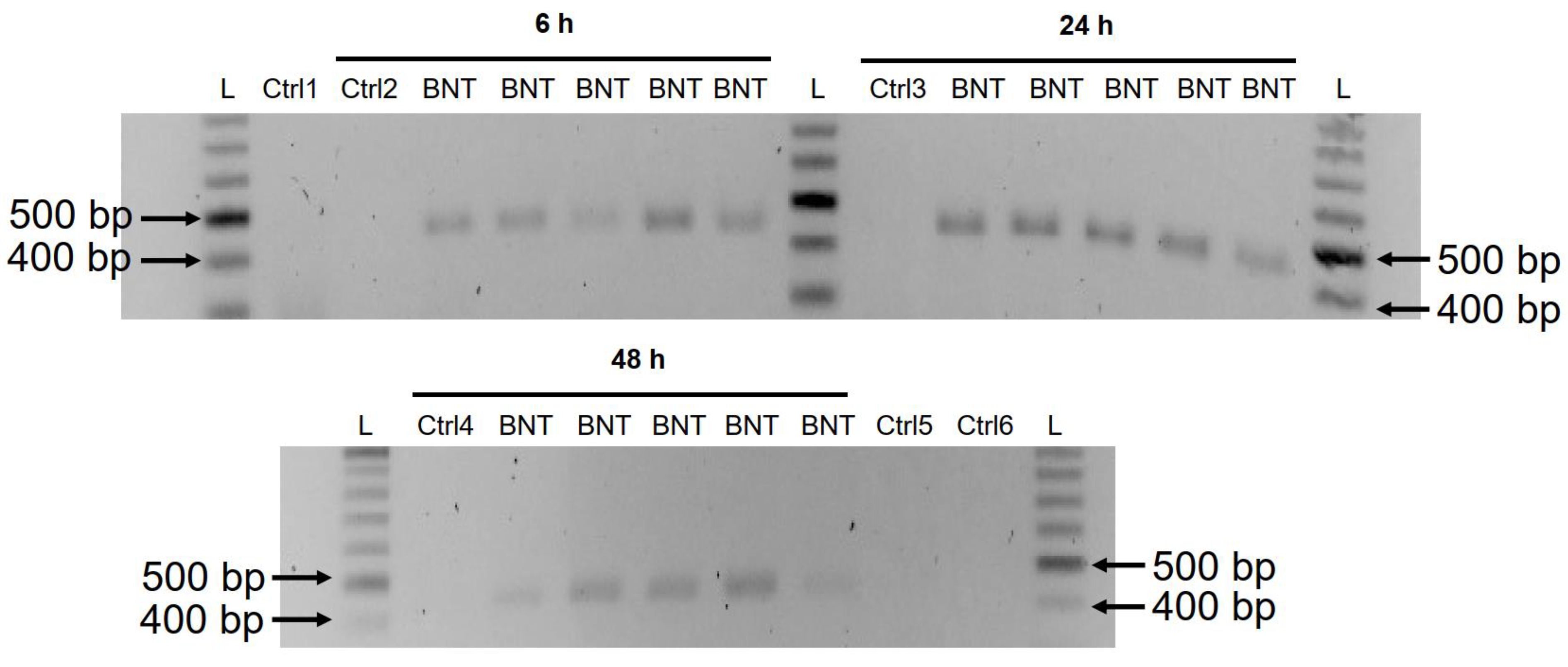
A previous report has shown that entry of LINE-1 protein into the nucleus is associated with retrotransposition [35]. In the immunofluorescence staining experiment described above, increased levels of LINE-1 in the nucleus were observed already at the lowest concentration of BNT162b2 (0.5 µg/mL). To examine if BNT162b2 is reversely transcribed into Deoxyribonucleic acid when LINE-one is elevated, we purified genomic Dna from Huh7 cells treated with 0.5 µg/mL of BNT162b2 for 6, 24, and 48 h. Purified DNA was treated with RNase to remove RNA and subjected to PCR using primers targeting BNT162b2, as illustrated in Figure one. Amplified Deoxyribonucleic acid fragments were then visualized by electrophoresis and gel-purified (Figure five). BNT162b2 DNA amplicons were detected in all iii time points (half dozen, 24, and 48 h). Sanger sequencing confirmed that the DNA amplicons were identical to the BNT162b2 sequence flanked by the primers (Tabular array 2). To ensure that the Deoxyribonucleic acid amplicons were derived from Deoxyribonucleic acid merely not BNT162b2 RNA, we likewise performed PCR on RNA purified from Huh7 cells treated with 0.v µg/mL BNT162b2 for 6 h, with or without RNase treatment (Ctrl 5 and 6 in Figure 5), and no amplicon was detected in the RNA samples subjected to PCR.
4. Word
In this study we present evidence that COVID-19 mRNA vaccine BNT162b2 is able to enter the human liver prison cell line Huh7 in vitro. BNT162b2 mRNA is reverse transcribed intracellularly into Dna as fast as 6 h after BNT162b2 exposure. A possible mechanism for reverse transcription is through endogenous reverse transcriptase LINE-1, and the nucleus poly peptide distribution of LINE-1 is elevated by BNT162b2.
Intracellular accumulation of LNP in hepatocytes has been demonstrated in vivo [36]. A preclinical study on BNT162b2 showed that BNT162b2 enters the human being cell line HEK293T cells and leads to robust expression of BNT162b2 antigen [37]. Therefore, in this study, we first investigated the entry of BNT162b2 in the human being liver cell line Huh7 cells. The choice of BNT162b2 concentrations used in this report warrants explanation. BNT162b2 is administered every bit a series of ii doses three weeks apart, and each dose contains xxx µg of BNT162b2 in a book of 0.3 mL, which makes the local concentration at the injection site at the highest 100 µg/mL [31]. A previous report on mRNA vaccines against H10N8 and H7N9 influenza viruses using a similar LNP delivery organisation showed that the mRNA vaccine can distribute rather nonspecifically to several organs such as liver, spleen, heart, kidney, lung, and encephalon, and the concentration in the liver is roughly 100 times lower than that of the intra-muscular injection site [38]. In the assessment report on BNT162b2 provided to EMA by Pfizer, the pharmacokinetic distribution studies in rats demonstrated that a relatively large proportion (up to 18%) of the total dose distributes to the liver [26]. We therefore chose to employ 0.five, one, and two μg/mL of vaccine in our experiments on the liver cells. However, the effect of a broader range of lower and higher concentrations of BNT162b2 should also be verified in futurity studies.
In the current study, nosotros employed a homo liver jail cell line for in vitro investigation. It is worth investigating if the liver cells also present the vaccine-derived SARS-CoV-2 spike poly peptide, which could potentially make the liver cells targets for previously primed fasten poly peptide reactive cytotoxic T cells. At that place has been example reports on individuals who developed autoimmune hepatitis [39] after BNT162b2 vaccination. To obtain improve agreement of the potential effects of BNT162b2 on liver function, in vivo models are desired for future studies.
In the BNT162b2 toxicity report, no genotoxicity nor carcinogenicity studies have been provided [26]. Our study shows that BNT162b2 can be contrary transcribed to Deoxyribonucleic acid in liver cell line Huh7, and this may requite rising to the concern if BNT162b2-derived Deoxyribonucleic acid may be integrated into the host genome and touch the integrity of genomic DNA, which may potentially mediate genotoxic side effects. At this stage, we practice not know if Dna contrary transcribed from BNT162b2 is integrated into the cell genome. Further studies are needed to demonstrate the effect of BNT162b2 on genomic integrity, including whole genome sequencing of cells exposed to BNT162b2, every bit well as tissues from human subjects who received BNT162b2 vaccination.
Human democratic retrotransposon LINE-1 is a cellular endogenous opposite transcriptase and the only remaining active transposon in humans, able to retrotranspose itself and other nonautonomous elements [40,41], and ~17% of the human genome are comprised of LINE-i sequences [42]. The nonautonomous Alu elements, short, interspersed nucleotide elements (SINEs), variable-number-of-tandem-repeats (VNTR), likewise equally cellular mRNA-candy pseudogenes, are retrotransposed by the LINE-one retrotransposition proteins working in trans [43,44]. A recent study showed that endogenous LINE-1 mediates contrary transcription and integration of SARS-CoV-2 sequences in the genomes of infected human being cells [25]. Furthermore, expression of endogenous LINE-1 is frequently increased upon viral infection, including SARS-CoV-2 infection [45,46,47]. Previous studies showed that LINE-1 retrotransposition activity is regulated by RNA metabolism [48,49], Deoxyribonucleic acid damage response [fifty], and autophagy [51]. Efficient retrotransposition of LINE-1 is ofttimes associated with cell cycle and nuclear envelope breakdown during mitosis [52,53], besides as exogenous retroviruses [54,55], which promotes entrance of LINE-i into the nucleus. In our report, nosotros observed increased LINE-1 ORF1p distribution as determined past immunohistochemistry in the nucleus by BNT162b2 at all concentrations tested (0.5, 1, and two μg/mL), while elevated LINE-1 gene expression was detected at the highest BNT162b2 concentration (2 μg/mL). It is worth noting that factor transcription is regulated past chromatin modifications, transcription factor regulation, and the rate of RNA degradation, while translational regulation of protein involves ribosome recruitment on the initiation codon, modulation of peptide elongation, termination of protein synthesis, or ribosome biogenesis. These two processes are controlled by different mechanisms, and therefore they may non always show the aforementioned change patterns in response to external challenges. The exact regulation of LINE-one activity in response to BNT162b2 merits further study.
The cell model that we used in this written report is a carcinoma prison cell line, with active Dna replication which differs from non-dividing somatic cells. Information technology has also been shown that Huh7 cells brandish meaning dissimilar factor and protein expression including upregulated proteins involved in RNA metabolism [56]. Yet, prison cell proliferation is also active in several human tissues such as the bone marrow or basal layers of epithelia every bit well as during embryogenesis, and it is therefore necessary to examine the upshot of BNT162b2 on genomic integrity under such weather. Furthermore, effective retrotransposition of LINE-1 has also been reported in non-dividing and terminally differentiated cells, such equally human neurons [57,58].
The Pfizer EMA assessment written report also showed that BNT162b2 distributes in the spleen (<i.i%), adrenal glands (<0.1%), too as low and measurable radioactivity in the ovaries and testes (<0.i%) [26]. Furthermore, no information on placental transfer of BNT162b2 is bachelor from Pfizer EMA assessment report. Our results showed that BNT162b2 mRNA readily enters Huh7 cells at a concentration (0.v µg/mL) corresponding to 0.5% of the local injection site concentration, induce changes in LINE-i gene and protein expression, and within 6 h, contrary transcription of BNT162b2 can be detected. It is therefore important to investigate further the outcome of BNT162b2 on other cell types and tissues both in vitro and in vivo.
5. Conclusions
Our written report is the first in vitro report on the effect of COVID-19 mRNA vaccine BNT162b2 on human liver jail cell line. We present evidence on fast entry of BNT162b2 into the cells and subsequent intracellular reverse transcription of BNT162b2 mRNA into DNA.
Supplementary Materials
Author Contributions
M.A., F.O.F., D.Y., Chiliad.B. and C.L. performed in vitro experiments. M.A. and F.O.F. performed information analysis. M.R. and Y.D.1000. contributed to the implementation of the research, designed, and supervised the study. Y.D.Yard. wrote the paper with input from all authors. All authors take read and agreed to the published version of the manuscript.
Funding
This study was supported past the Swedish Research Council, Strategic Enquiry Area Exodiab, Dnr 2009-1039, the Swedish Government Fund for Clinical Research (ALF) and the foundation of Skåne University Infirmary.
Institutional Review Lath Statement
Not applicable.
Informed Consent Statement
Not applicative.
Data Availability Statement
All data supporting the findings of this study are bachelor within the article and supporting information.
Acknowledgments
The authors thank Sven Haidl, Maria Josephson, Enming Zhang, Jia-Yi Li, Caroline Haikal, and Pradeep Bompada for their support to this study.
Conflicts of Interest
The authors declare no conflict of interest.
References
- World Health Arrangement. Coronavirus (COVID-19) Dashboard. Available online: https://covid19.who.int/ (accessed on 22 February 2022).
- Mulligan, M.J.; Lyke, K.E.; Kitchin, N.; Absalon, J.; Gurtman, A.; Lockhart, S.; Neuzil, Thousand.; Raabe, 5.; Bailey, R.; Swanson, 1000.A.; et al. Phase I/II report of COVID-19 RNA vaccine BNT162b1 in adults. Nature 2020, 586, 589–593. [Google Scholar] [CrossRef] [PubMed]
- Walsh, East.East.; Frenck, R.W., Jr.; Falsey, A.R.; Kitchin, North.; Absalon, J.; Gurtman, A.; Lockhart, S.; Neuzil, Thousand.; Mulligan, G.J.; Bailey, R.; et al. Safety and Immunogenicity of Ii RNA-Based COVID-19 Vaccine Candidates. N. Engl. J. Med. 2020, 383, 2439–2450. [Google Scholar] [CrossRef] [PubMed]
- Polack, F.P.; Thomas, S.J.; Kitchin, N.; Absalon, J.; Gurtman, A.; Lockhart, S.; Perez, J.L.; Perez Marc, K.; Moreira, E.D.; Zerbini, C.; et al. Safety and Efficacy of the BNT162b2 mRNA COVID-19 Vaccine. North. Engl. J. Med. 2020, 383, 2603–2615. [Google Scholar] [CrossRef] [PubMed]
- Harris, R.J.; Hall, J.A.; Zaidi, A.; Andrews, Due north.J.; Dunbar, J.M.; Dabrera, 1000. Upshot of Vaccination on Household Transmission of SARS-CoV-2 in England. N. Engl. J. Med. 2021, 385, 759–760. [Google Scholar] [CrossRef]
- Butt, A.A.; Omer, South.B.; Yan, P.; Shaikh, O.S.; Mayr, F.B. SARS-CoV-2 Vaccine Effectiveness in a Loftier-Risk National Population in a Real-Earth Setting. Ann. Intern. Med. 2021, 174, 1404–1408. [Google Scholar] [CrossRef]
- Dagan, N.; Barda, Due north.; Kepten, E.; Miron, O.; Perchik, S.; Katz, M.A.; Hernan, M.A.; Lipsitch, M.; Reis, B.; Balicer, R.D. BNT162b2 mRNA Covid-19 Vaccine in a Nationwide Mass Vaccination Setting. Northward. Engl. J. Med. 2021, 384, 1412–1423. [Google Scholar] [CrossRef]
- Rossman, H.; Shilo, S.; Meir, T.; Gorfine, One thousand.; Shalit, U.; Segal, E. COVID-xix dynamics afterwards a national immunization program in Israel. Nat. Med. 2021, 27, 1055–1061. [Google Scholar] [CrossRef]
- Fan, B.E.; Shen, J.Y.; Lim, Ten.R.; Tu, T.M.; Chang, C.C.R.; Khin, H.S.Westward.; Koh, J.S.; Rao, J.P.; Lau, S.L.; Tan, Grand.B.; et al. Cerebral venous thrombosis post BNT162b2 mRNA SARS-CoV-2 vaccination: A black swan upshot. Am. J. Hematol. 2021, 96, E357–E361. [Google Scholar] [CrossRef]
- Larson, Chiliad.F.; Ammirati, East.; Adler, Eastward.D.; Cooper, 50.T., Jr.; Hong, K.N.; Saponara, G.; Couri, D.; Cereda, A.; Procopio, A.; Cavalotti, C.; et al. Myocarditis Afterwards BNT162b2 and mRNA-1273 Vaccination. Circulation 2021, 144, 506–508. [Google Scholar] [CrossRef]
- Menni, C.; Klaser, Grand.; May, A.; Polidori, L.; Capdevila, J.; Louca, P.; Sudre, C.H.; Nguyen, L.H.; Drew, D.A.; Merino, J.; et al. Vaccine side-effects and SARS-CoV-2 infection afterward vaccination in users of the COVID Symptom Report app in the UK: A prospective observational study. Lancet Infect. Dis. 2021, 21, 939–949. [Google Scholar] [CrossRef]
- Hansen, T.; Titze, U.; Kulamadayil-Heidenreich, N.S.A.; Glombitza, Due south.; Tebbe, J.J.; Rocken, C.; Schulz, B.; Weise, Thousand.; Wilkens, L. Get-go example of postmortem written report in a patient vaccinated against SARS-CoV-2. Int. J. Infect. Dis. 2021, 107, 172–175. [Google Scholar] [CrossRef] [PubMed]
- Kadali, R.A.Thousand.; Janagama, R.; Peruru, S.; Malayala, Southward.V. Side effects of BNT162b2 mRNA COVID-nineteen vaccine: A randomized, cross-sectional study with detailed cocky-reported symptoms from healthcare workers. Int. J. Infect. Dis. 2021, 106, 376–381. [Google Scholar] [CrossRef] [PubMed]
- Parkash, O.; Sharko, A.; Farooqi, A.; Ying, Thousand.West.; Sura, P. Astute Pancreatitis: A Possible Side Upshot of COVID-xix Vaccine. Cureus 2021, 13, e14741. [Google Scholar] [CrossRef] [PubMed]
- Mazzatenta, C.; Piccolo, V.; Pace, G.; Romano, I.; Argenziano, Thousand.; Bassi, A. Purpuric lesions on the eyelids developed after BNT162b2 mRNA COVID-19 vaccine: Another piece of SARS-CoV-ii skin puzzle? J. Eur. Acad. Dermatol. Venereol. 2021, 35, e543–e545. [Google Scholar] [CrossRef]
- Lee, E.J.; Cines, D.B.; Gernsheimer, T.; Kessler, C.; Michel, M.; Tarantino, M.D.; Semple, J.W.; Arnold, D.M.; Godeau, B.; Lambert, M.P.; et al. Thrombocytopenia post-obit Pfizer and Moderna SARS-CoV-2 vaccination. Am. J. Hematol. 2021, 96, 534–537. [Google Scholar] [CrossRef]
- Ishay, Y.; Kenig, A.; Tsemach-Toren, T.; Amer, R.; Rubin, L.; Hershkovitz, Y.; Kharouf, F. Autoimmune phenomena following SARS-CoV-two vaccination. Int. Immunopharmacol. 2021, 99, 107970. [Google Scholar] [CrossRef]
- Das, B.B.; Kohli, U.; Ramachandran, P.; Nguyen, H.H.; Greil, 1000.; Hussain, T.; Tandon, A.; Kane, C.; Avula, S.; Duru, C.; et al. Myopericarditis following mRNA COVID-19 Vaccination in Adolescents 12 through xviii Years of Age. J. Pediatr. 2021, 238, 26–32.e1. [Google Scholar] [CrossRef]
- McLaurin-Jiang, Southward.; Garner, C.D.; Krutsch, K.; Unhurt, T.Due west. Maternal and Child Symptoms Post-obit COVID-19 Vaccination Among Breastfeeding Mothers. Breastfeed. Med. 2021, 16, 702–709. [Google Scholar] [CrossRef]
- Barda, N.; Dagan, N.; Ben-Shlomo, Y.; Kepten, Eastward.; Waxman, J.; Ohana, R.; Hernan, K.A.; Lipsitch, M.; Kohane, I.; Netzer, D.; et al. Safe of the BNT162b2 mRNA Covid-19 Vaccine in a Nationwide Setting. Due north. Engl. J. Med. 2021, 385, 1078–1090. [Google Scholar] [CrossRef]
- Baden, L.R.; El Sahly, H.M.; Essink, B.; Kotloff, K.; Frey, S.; Novak, R.; Diemert, D.; Spector, Due south.A.; Rouphael, N.; Creech, C.B.; et al. Efficacy and Safety of the mRNA-1273 SARS-CoV-2 Vaccine. N. Engl. J. Med. 2021, 384, 403–416. [Google Scholar] [CrossRef]
- Sadoff, J.; Gray, M.; Vandebosch, A.; Cardenas, V.; Shukarev, G.; Grinsztejn, B.; Goepfert, P.A.; Truyers, C.; Fennema, H.; Spiessens, B.; et al. Safety and Efficacy of Single-Dose Ad26.COV2.S Vaccine against Covid-xix. N. Engl. J. Med. 2021, 384, 2187–2201. [Google Scholar] [CrossRef] [PubMed]
- Eichinger, S.; Warkentin, T.E.; Greinacher, A. Thrombotic Thrombocytopenia after ChAdOx1 nCoV-xix Vaccination. Reply. N. Engl. J. Med. 2021, 385, e11. [Google Scholar] [CrossRef] [PubMed]
- Doroftei, B.; Ciobica, A.; Ilie, O.D.; Maftei, R.; Ilea, C. Mini-Review Discussing the Reliability and Efficiency of COVID-xix Vaccines. Diagnostics 2021, xi, 579. [Google Scholar] [CrossRef]
- Zhang, Fifty.; Richards, A.; Barrasa, 1000.I.; Hughes, S.H.; Young, R.A.; Jaenisch, R. Opposite-transcribed SARS-CoV-2 RNA tin integrate into the genome of cultured human cells and tin can be expressed in patient-derived tissues. Proc. Natl. Acad. Sci. Usa 2021, 118, e2105968118. [Google Scholar] [CrossRef] [PubMed]
- Bachelor online: https://world wide web.ema.europa.eu/en/documents/cess-written report/comirnaty-epar-public-assessment-report_en.pdf (accessed on 24 February 2022).
- Tanaka, H.; Takata, Northward.; Sakurai, Y.; Yoshida, T.; Inoue, T.; Tamagawa, South.; Nakai, Y.; Tange, 1000.; Yoshioka, H.; Maeki, Yard.; et al. Commitment of Oligonucleotides Using a Self-Degradable Lipid-Similar Textile. Pharmaceutics 2021, 13, 544. [Google Scholar] [CrossRef]
- Sedic, M.; Senn, J.J.; Lynn, A.; Laska, M.; Smith, M.; Platz, South.J.; Bolen, J.; Hoge, S.; Bulychev, A.; Jacquinet, E.; et al. Safety Evaluation of Lipid Nanoparticle-Formulated Modified mRNA in the Sprague-Dawley Rat and Cynomolgus Monkey. Vet. Pathol. 2018, 55, 341–354. [Google Scholar] [CrossRef]
- Sato, Y.; Matsui, H.; Yamamoto, N.; Sato, R.; Munakata, T.; Kohara, G.; Harashima, H. Highly specific delivery of siRNA to hepatocytes circumvents endothelial cell-mediated lipid nanoparticle-associated toxicity leading to the safety and efficacious subtract in the hepatitis B virus. J. Control. Release 2017, 266, 216–225. [Google Scholar] [CrossRef]
- Heidel, J.D.; Yu, Z.; Liu, J.Y.; Rele, S.M.; Liang, Y.; Zeidan, R.K.; Kornbrust, D.J.; Davis, M.E. Administration in non-human primates of escalating intravenous doses of targeted nanoparticles containing ribonucleotide reductase subunit M2 siRNA. Proc. Natl. Acad. Sci. USA 2007, 104, 5715–5721. [Google Scholar] [CrossRef]
- Bachelor online: https://world wide web.cvdvaccine-us.com/ (accessed on 24 February 2022).
- Available online: http://bridgeslab.sph.umich.edu/protocols/index.php/Preparation_of_Tail_Samples_(for_Genotyping) (accessed on 24 Feb 2022).
- Gallud, A.; Munson, M.J.; Liu, K.; Idstrom, A.; Barriga, H.M.; Tabaei, Due south.; Aliakbarinodehi, N.; Ojansivu, M.; Lubart, Q.; Doutch, J.J.; et al. Time evolution of PEG-shedding and serum protein coronation determines the cell uptake kinetics and delivery of lipid nanoparticle. bioRxiv 2021. [Google Scholar] [CrossRef]
- World Health Organisation Messenger RNA Encoding the Total-Length SARS-CoV-2 Fasten Glycoprotein. 2020. Bachelor online: https://web.annal.org/web/20210105162941/https://mednet-communities.net/inn/db/media/docs/11889.doc (accessed on 24 February 2022).
- Mita, P.; Wudzinska, A.; Sun, Ten.; Andrade, J.; Nayak, Due south.; Kahler, D.J.; Badri, S.; LaCava, J.; Ueberheide, B.; Yun, C.Y.; et al. LINE-i poly peptide localization and functional dynamics during the cell cycle. Elife 2018, 7, e30058. [Google Scholar] [CrossRef]
- Sato, Y.; Kinami, Y.; Hashiba, K.; Harashima, H. Different kinetics for the hepatic uptake of lipid nanoparticles between the apolipoprotein Due east/low density lipoprotein receptor and the N-acetyl-d-galactosamine/asialoglycoprotein receptor pathway. J. Control. Release 2020, 322, 217–226. [Google Scholar] [CrossRef]
- Vogel, A.B.; Kanevsky, I.; Che, Y.; Swanson, K.A.; Muik, A.; Vormehr, Chiliad.; Kranz, 50.M.; Walzer, K.C.; Hein, Southward.; Guler, A.; et al. BNT162b vaccines protect rhesus macaques from SARS-CoV-2. Nature 2021, 592, 283–289. [Google Scholar] [CrossRef] [PubMed]
- Bahl, K.; Senn, J.J.; Yuzhakov, O.; Bulychev, A.; Brito, L.A.; Hassett, K.J.; Laska, G.E.; Smith, M.; Almarsson, O.; Thompson, J.; et al. Preclinical and Clinical Demonstration of Immunogenicity by mRNA Vaccines against H10N8 and H7N9 Flu Viruses. Mol. Ther. 2017, 25, 1316–1327. [Google Scholar] [CrossRef] [PubMed]
- Bril, F.; Al Diffalha, S.; Dean, One thousand.; Fettig, D.M. Autoimmune hepatitis developing subsequently coronavirus disease 2019 (COVID-19) vaccine: Causality or casualty? J. Hepatol. 2021, 75, 222–224. [Google Scholar] [CrossRef]
- Kazazian, H.H., Jr.; Moran, J.V. Mobile DNA in Wellness and Disease. North. Engl. J. Med. 2017, 377, 361–370. [Google Scholar] [CrossRef] [PubMed]
- Coffin, J.M.; Fan, H. The Discovery of Reverse Transcriptase. Annu. Rev. Virol. 2016, 3, 29–51. [Google Scholar] [CrossRef]
- Lander, E.S.; Linton, L.M.; Birren, B.; Nusbaum, C.; Zody, Thou.C.; Baldwin, J.; Devon, K.; Dewar, Thousand.; Doyle, M.; FitzHugh, W.; et al. Initial sequencing and analysis of the man genome. Nature 2001, 409, 860–921. [Google Scholar] [CrossRef]
- Ostertag, East.M.; Goodier, J.L.; Zhang, Y.; Kazazian, H.H., Jr. SVA elements are nonautonomous retrotransposons that crusade disease in humans. Am. J. Hum. Genet. 2003, 73, 1444–1451. [Google Scholar] [CrossRef]
- Hancks, D.C.; Kazazian, H.H., Jr. Agile human retrotransposons: Variation and illness. Curr. Opin. Genet. Dev. 2012, 22, 191–203. [Google Scholar] [CrossRef]
- Jones, R.B.; Song, H.; Xu, Y.; Garrison, Thou.Eastward.; Buzdin, A.A.; Anwar, N.; Hunter, D.Five.; Mujib, S.; Mihajlovic, Five.; Martin, E.; et al. LINE-1 retrotransposable chemical element DNA accumulates in HIV-1-infected cells. J. Virol. 2013, 87, 13307–13320. [Google Scholar] [CrossRef]
- Macchietto, One thousand.Thou.; Langlois, R.A.; Shen, S.S. Virus-induced transposable chemical element expression up-regulation in human and mouse host cells. Life Sci. Alliance 2020, 3, e201900536. [Google Scholar] [CrossRef] [PubMed]
- Yin, Y.; Liu, 10.Z.; He, Ten.; Zhou, Fifty.Q. Exogenous Coronavirus Interacts With Endogenous Retrotransposon in Human Cells. Forepart. Cell Infect. Microbiol. 2021, 11, 609160. [Google Scholar] [CrossRef] [PubMed]
- Belancio, V.P.; Roy-Engel, A.M.; Deininger, P. The impact of multiple splice sites in homo L1 elements. Cistron 2008, 411, 38–45. [Google Scholar] [CrossRef] [PubMed]
- Dai, Fifty.; Taylor, M.South.; O'Donnell, 1000.A.; Boeke, J.D. Poly(A) binding protein C1 is essential for efficient L1 retrotransposition and affects L1 RNP formation. Mol. Prison cell Biol. 2012, 32, 4323–4336. [Google Scholar] [CrossRef]
- Servant, G.; Streva, V.A.; Derbes, R.S.; Wijetunge, G.I.; Neeland, M.; White, T.B.; Belancio, V.P.; Roy-Engel, A.M.; Deininger, P.50. The Nucleotide Excision Repair Pathway Limits L1 Retrotransposition. Genetics 2017, 205, 139–153. [Google Scholar] [CrossRef]
- Guo, H.; Chitiprolu, M.; Gagnon, D.; Meng, Fifty.; Perez-Iratxeta, C.; Lagace, D.; Gibbings, D. Autophagy supports genomic stability by degrading retrotransposon RNA. Nat. Commun. 2014, 5, 5276. [Google Scholar] [CrossRef]
- Xie, Y.; Mates, L.; Ivics, Z.; Izsvak, Z.; Martin, S.Fifty.; An, West. Cell division promotes efficient retrotransposition in a stable L1 reporter jail cell line. Mob. DNA 2013, 4, x. [Google Scholar] [CrossRef]
- Shi, X.; Seluanov, A.; Gorbunova, V. Prison cell divisions are required for L1 retrotransposition. Mol. Cell Biol. 2007, 27, 1264–1270. [Google Scholar] [CrossRef]
- Goff, S.P. Host factors exploited by retroviruses. Nat. Rev. Microbiol 2007, 5, 253–263. [Google Scholar] [CrossRef]
- Suzuki, Y.; Craigie, R. The road to chromatin—Nuclear entry of retroviruses. Nat. Rev. Microbiol. 2007, 5, 187–196. [Google Scholar] [CrossRef]
- Shi, J.; Wang, Ten.; Lyu, Fifty.; Jiang, H.; Zhu, H.J. Comparing of protein expression between man livers and the hepatic cell lines HepG2, Hep3B, and Huh7 using SWATH and MRM-Hr proteomics: Focusing on drug-metabolizing enzymes. Drug Metab. Pharmacokinet. 2018, 33, 133–140. [Google Scholar] [CrossRef] [PubMed]
- Kubo, S.; Seleme, M.C.; Soifer, H.Southward.; Perez, J.L.; Moran, J.V.; Kazazian, H.H., Jr.; Kasahara, N. L1 retrotransposition in nondividing and primary human being somatic cells. Proc. Natl. Acad. Sci. United states of america 2006, 103, 8036–8041. [Google Scholar] [CrossRef] [PubMed]
- Macia, A.; Widmann, T.J.; Heras, S.R.; Ayllon, 5.; Sanchez, 50.; Benkaddour-Boumzaouad, K.; Munoz-Lopez, M.; Rubio, A.; Amador-Cubero, South.; Blanco-Jimenez, E.; et al. Engineered LINE-1 retrotransposition in nondividing human being neurons. Genome Res. 2017, 27, 335–348. [Google Scholar] [CrossRef] [PubMed]
Figure 1. PCR primer prepare used to detect mRNA level and reverse-transcription of BNT162b2. Illustration of BNT162b2 was adapted from previously described literature [34].
Figure 1. PCR primer set up used to detect mRNA level and opposite-transcription of BNT162b2. Illustration of BNT162b2 was adapted from previously described literature [34].
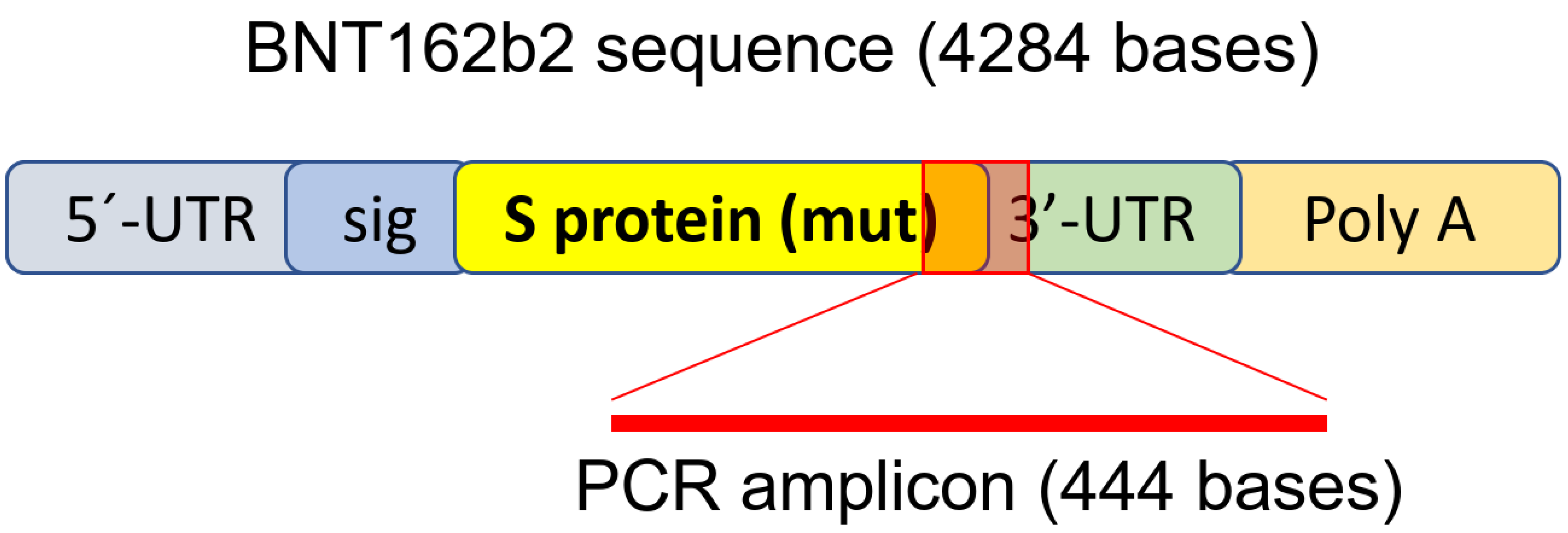
Figure two. BNT162b2 mRNA levels in Huh7 cells treated with BNT162b2. Huh7 cells were treated without (Ctrl) or with 0.5 (V1), 1 (V2), and two µg/mL (V3) of BNT162b2 for half-dozen (green dots), 24 (orangish dots), and 48 h (blue dots). RNA was purified and qPCR was performed using primers targeting BNT162b2. RNA levels of BNT162b2 are presented every bit logged 2−ΔΔCT values relative to business firm-keeping genes GAPDH and ACTB. Results are from five independent experiments (n = 5). Differences between respective groups were analyzed using two-tailed Student'south t-test. Data are expressed equally the mean ± SEM. (* p < 0.05; ** p < 0.01; *** p < 0.001 vs. respective command at each time bespeak, or every bit indicated).
Figure 2. BNT162b2 mRNA levels in Huh7 cells treated with BNT162b2. Huh7 cells were treated without (Ctrl) or with 0.five (V1), ane (V2), and 2 µg/mL (V3) of BNT162b2 for 6 (light-green dots), 24 (orange dots), and 48 h (blueish dots). RNA was purified and qPCR was performed using primers targeting BNT162b2. RNA levels of BNT162b2 are presented as logged 2−ΔΔCT values relative to business firm-keeping genes GAPDH and ACTB. Results are from five independent experiments (northward = 5). Differences between respective groups were analyzed using 2-tailed Student'south t-test. Data are expressed equally the mean ± SEM. (* p < 0.05; ** p < 0.01; *** p < 0.001 vs. respective control at each time point, or as indicated).
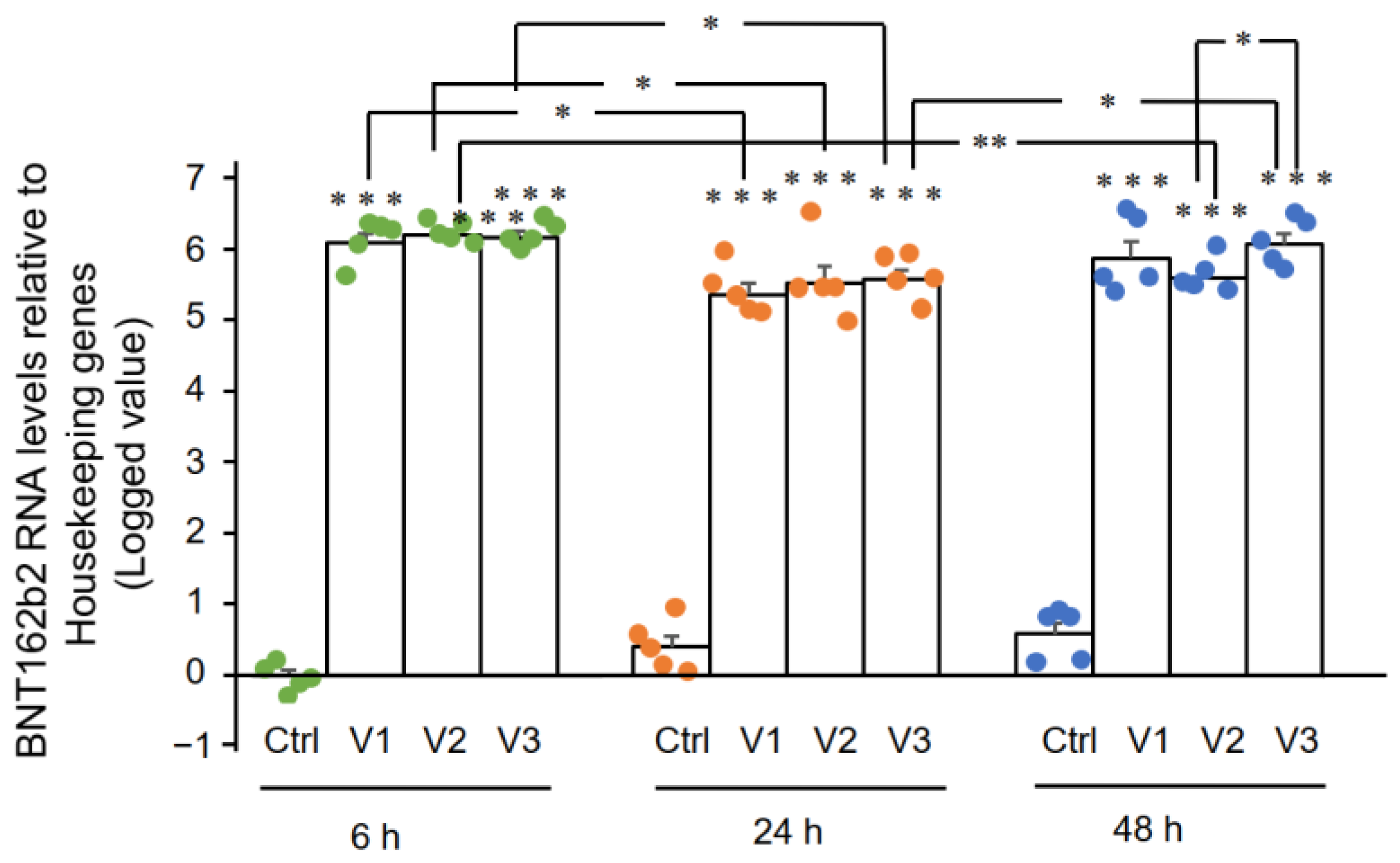
Figure iii. LINE-1 mRNA levels in Huh7 cells treated with BNT162b2. Huh7 cells were treated without (Ctrl) or with 0.5 (V1), 1 (V2), and two µg/mL (V3) of BNT162b2 for 6 (green dots), 24 (red dots), and 48 h (blue dots). RNA was purified and qPCR was performed using primers targeting LINE-ane. RNA levels of LINE-1 are presented every bit ii−ΔΔCT values relative to house-keeping genes GAPDH and ACTB. Results are from five independent experiments (n = 5). Differences between respective groups were analyzed using 2-tailed Student's t-exam. Data are expressed every bit the mean ± SEM. (* p < 0.05; ** p < 0.01; *** p < 0.001 vs. respective control at each time point, or as indicated; † p < 0.05 vs. half-dozen h-Ctrl).
Figure three. LINE-ane mRNA levels in Huh7 cells treated with BNT162b2. Huh7 cells were treated without (Ctrl) or with 0.five (V1), 1 (V2), and 2 µg/mL (V3) of BNT162b2 for half-dozen (light-green dots), 24 (red dots), and 48 h (bluish dots). RNA was purified and qPCR was performed using primers targeting LINE-1. RNA levels of LINE-i are presented every bit 2−ΔΔCT values relative to house-keeping genes GAPDH and ACTB. Results are from five independent experiments (n = 5). Differences betwixt corresponding groups were analyzed using 2-tailed Pupil's t-test. Data are expressed as the mean ± SEM. (* p < 0.05; ** p < 0.01; *** p < 0.001 vs. respective control at each time point, or as indicated; † p < 0.05 vs. 6 h-Ctrl).
Effigy four. Immunohistochemistry of Huh7 cells treated with BNT162b2 on LINE-1 protein distribution. Huh7 cells were treated without (Ctrl) or with 0.5, i, and 2 µg/mL of BNT162b2 for half-dozen h. Cells were fixed and stained with antibodies binding to LINE-1 ORF1p (red) and DNA-specific probe Hoechst for visualization of cell nucleus (blueish). (a) Representative images of LINE-one expression in Huh7 cells treated with or without BNT162b2. (b–d) Quantification of LINE-1 protein in whole prison cell area (b), cytosol (c), and nucleus (d). All data were analyzed using One-Manner ANOVA, and graphs were created using GraphPad Prism Five 9.2. All data is presented as mean ± SD (** p < 0.01; *** p < 0.001; **** p < 0.0001 equally indicated).
Figure 4. Immunohistochemistry of Huh7 cells treated with BNT162b2 on LINE-one protein distribution. Huh7 cells were treated without (Ctrl) or with 0.five, one, and 2 µg/mL of BNT162b2 for 6 h. Cells were fixed and stained with antibodies binding to LINE-1 ORF1p (red) and Dna-specific probe Hoechst for visualization of cell nucleus (blue). (a) Representative images of LINE-1 expression in Huh7 cells treated with or without BNT162b2. (b–d) Quantification of LINE-1 protein in whole jail cell area (b), cytosol (c), and nucleus (d). All data were analyzed using I-Manner ANOVA, and graphs were created using GraphPad Prism V 9.2. All data is presented as hateful ± SD (** p < 0.01; *** p < 0.001; **** p < 0.0001 as indicated).
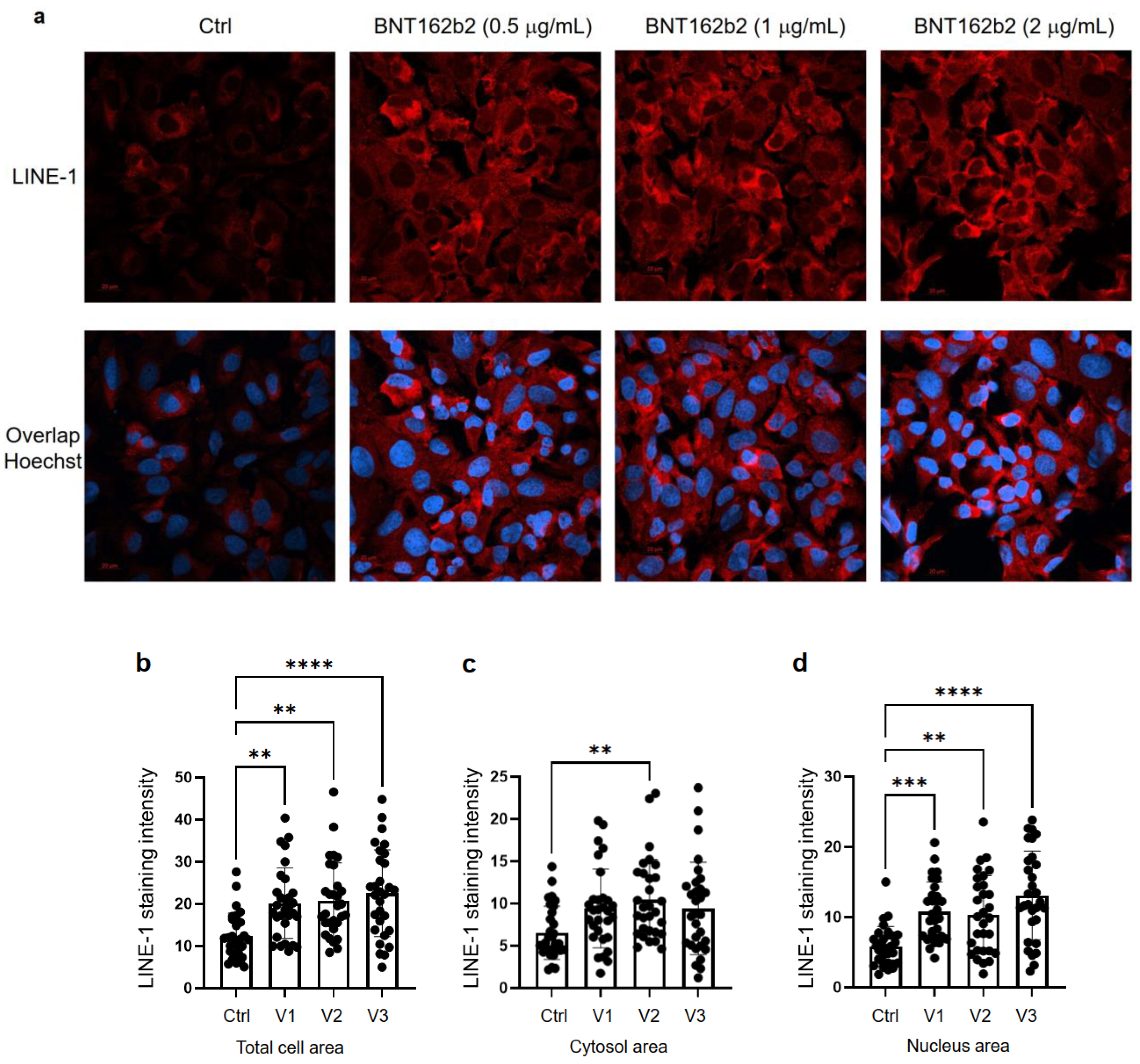
Figure 5. Detection of Deoxyribonucleic acid amplicons of BNT162b2 in Huh7 cells treated with BNT162b2. Huh7 cells were treated without (Ctrl) or with 0.five µg/mL of BNT162b2 for 6, 24, and 48 h. Genomic Dna was purified and digested with 100 µg/mL RNase. PCR was run on all samples with primers targeting BNT162b2, as shown in Figure 1 and Table 1. Dna amplicons (444 bps) were visualized on agarose gel. BNT: BNT162b2; L: DNA ladder; Ctrl1: cultured Huh7 cells; Ctrl2: Huh7 cells without BNT162b2 treatment collected at 6 h; Ctrl3: Huh7 cells without BNT162b2 treatment collected at 24 h; Ctrl4: Huh7 cells without BNT162b2 treatment collected at 48 h; Ctrl5: RNA from Huh7 cells treated with 0.5 µg/mL of BNT162b2 for 6 h; Ctrl6: RNA from Huh7 cells treated with 0.5 µg/mL of BNT162b2 for half dozen h, digested with RNase.
Figure 5. Detection of DNA amplicons of BNT162b2 in Huh7 cells treated with BNT162b2. Huh7 cells were treated without (Ctrl) or with 0.5 µg/mL of BNT162b2 for half-dozen, 24, and 48 h. Genomic DNA was purified and digested with 100 µg/mL RNase. PCR was run on all samples with primers targeting BNT162b2, equally shown in Figure 1 and Table 1. Dna amplicons (444 bps) were visualized on agarose gel. BNT: BNT162b2; L: Dna ladder; Ctrl1: cultured Huh7 cells; Ctrl2: Huh7 cells without BNT162b2 treatment collected at 6 h; Ctrl3: Huh7 cells without BNT162b2 handling collected at 24 h; Ctrl4: Huh7 cells without BNT162b2 treatment nerveless at 48 h; Ctrl5: RNA from Huh7 cells treated with 0.five µg/mL of BNT162b2 for six h; Ctrl6: RNA from Huh7 cells treated with 0.5 µg/mL of BNT162b2 for six h, digested with RNase.
Tabular array 1. Primer sequences of RT-qPCR and PCR.
Tabular array 1. Primer sequences of RT-qPCR and PCR.
| Target | Sequence |
|---|---|
| ACTB forward | CCTCGCCTTTGCCGATCC |
| ACTB reverse | GGATCTTCATGAGGTAGTCAGTC |
| GAPDH forward | CTCTGCTCCTCCTGTTCGAC |
| GAPDH reverse | TTAAAAGCAGCCCTGGTGAC |
| LINE-1 forward | TAACCAATACAGAGAAGTGC |
| LINE-ane contrary | GATAATATCCTGCAGAGTGT |
| BNT162b2 forward | CGAGGTGGCCAAGAATCTGA |
| BNT162b2 reverse | TAGGCTAAGCGTTTTGAGCTG |
Table 2. Sanger sequencing issue of the BNT162b2 amplicon.
Table 2. Sanger sequencing result of the BNT162b2 amplicon.
| CGAGGTGGCCAAGAATCTGAACGAGAGCCTGATCGACCTGCAAGAACTGGGGAAGT ACGAGCAGTACATCAAGTGGCCCTGGTACATCTGGCTGGGCTTTATCGCCGGACTGATTG CCATCGTGATGGTCACAATCATGCTGTGTTGCATGACCAGCTGCTGTAGCTGCCTGAAGG GCTGTTGTAGCTGTGGCAGCTGCTGCAAGTTCGACGAGGACGATTCTGAGCCCGTGCTGA |
| AGGGCGTGAAACTGCACTACACATGATGACTCGAGCTGGTACTGCATGCACGCAATGCTA GCTGCCCCTTTCCCGTCCTGGGTACCCCGAGTCTCCCCCGACCTCGGGTCCCAGGTATGC TCCCACCTCCACCTGCCCCACTCACCACCTCTGCTAGTTCCAGACACCTCCCAAGCACGC AGCAATGCAGCTCAAAACGCTTAGCCTA |
| Publisher's Note: MDPI stays neutral with regard to jurisdictional claims in published maps and institutional affiliations. |
© 2022 by the authors. Licensee MDPI, Basel, Switzerland. This article is an open access article distributed under the terms and conditions of the Creative Commons Attribution (CC BY) license (https://creativecommons.org/licenses/by/iv.0/).
DOWNLOAD HERE
Posted by: vaughnfromens.blogspot.com

